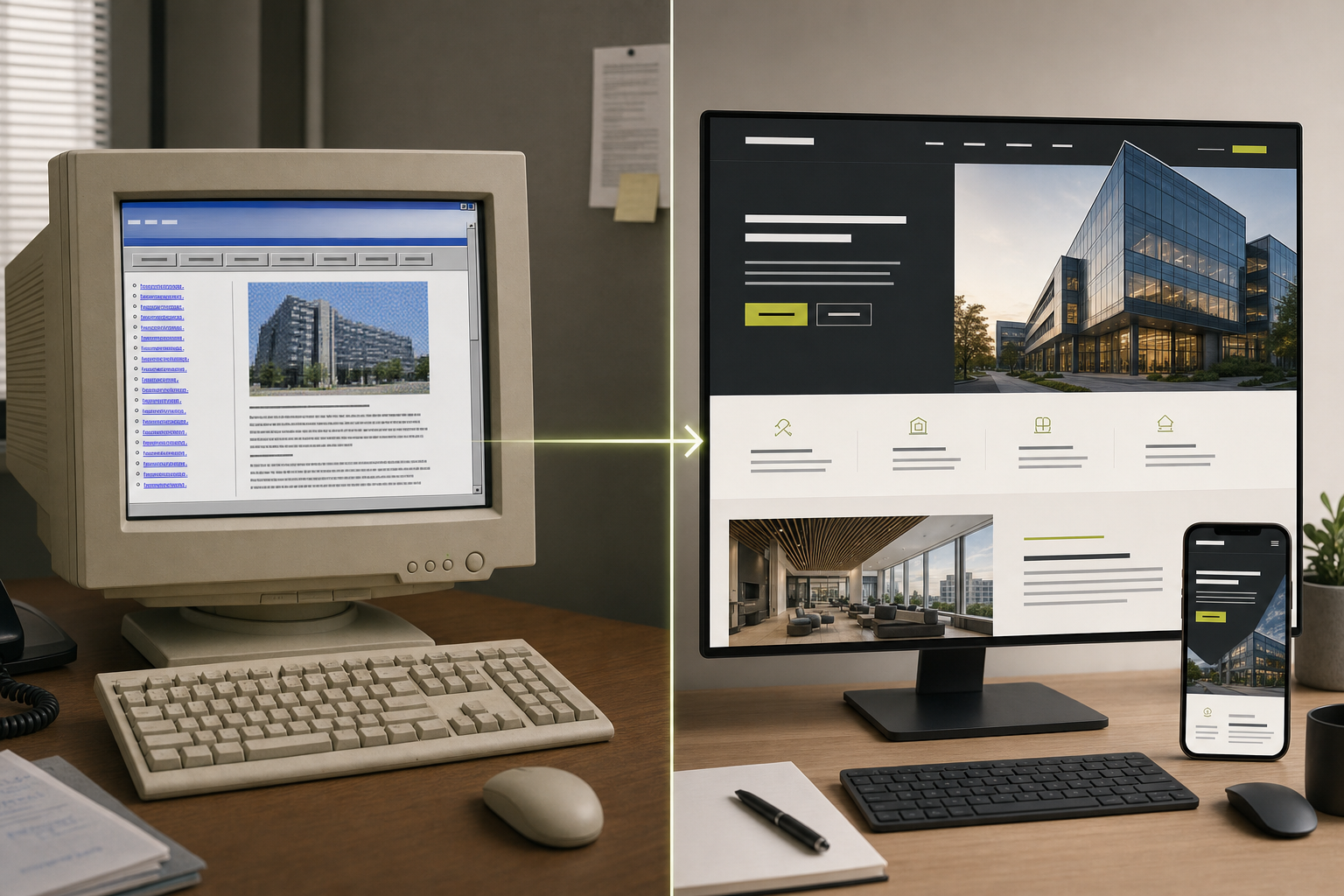
These are common project scenarios and delivery approaches, not unverified customer outcomes or testimonials.
The 2008 manufacturer brochure site
Start with the existing product PDFs, specification tables, distributor contacts, and high-value URLs. Separate current claims from historic material, then rebuild solutions, proof, downloads, and an enquiry path before mapping redirects.
The exporter with three inconsistent language sites
Inventory each language URL and owner first. Reuse verified facts, localize the buying context, give every language a deliberate URL, and review canonical, hreflang, and redirect decisions before launch.
The consulting firm with a polished but vague homepage
Replace generic positioning with named services, public evidence, responsible people, and one clear contact route. The useful deliverable is an approved message and review trail, not an invented conversion claim.
The portfolio that is only a thumbnail wall
Choose a small number of projects, state the role and constraints, show permitted evidence, and give a reviewer a focused resume and contact action. Do not add outcomes that cannot be verified.
The inherited CMS nobody wants to touch
Export the pages, assets, forms, and analytics notes; mark what is private, obsolete, or unlicensed; then publish a reviewed replacement in stages. Preserve search routes only where they still serve a real visitor need.
The launch that has to keep changing
Treat the new site as an operating workspace: retain source files, Drafts, approvals, and the published version so the next product change starts from evidence instead of another blank redesign.